


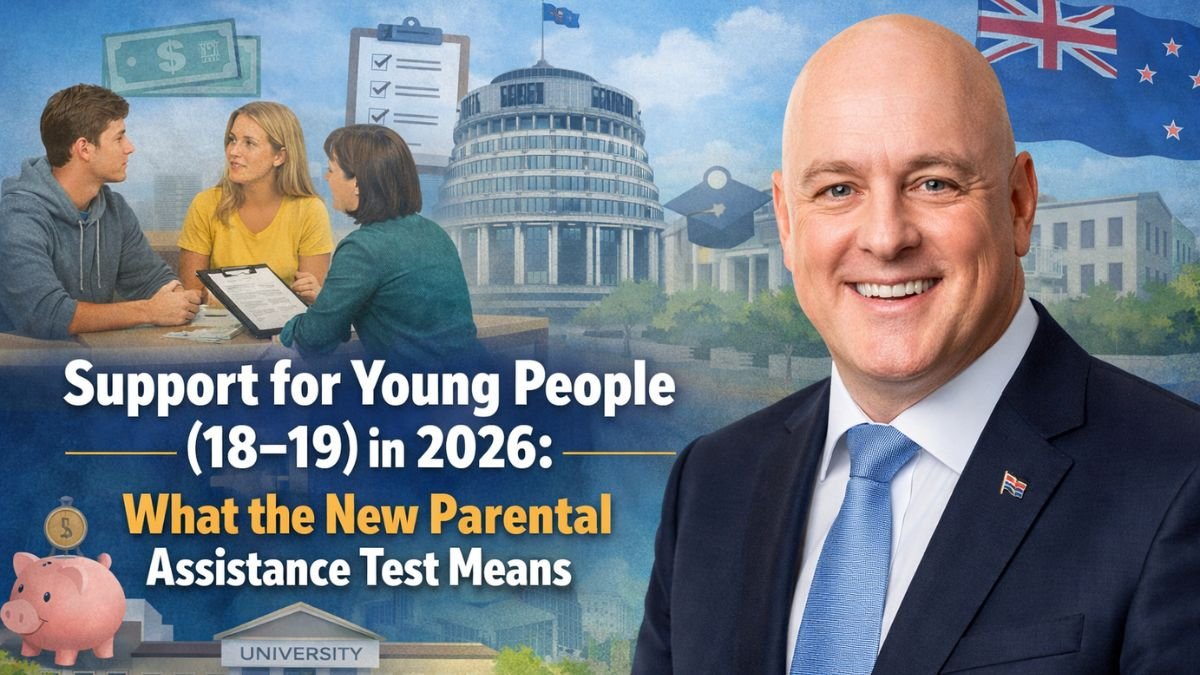
From November 2026, the government is introducing a significant change to income support for young people aged 18 and 19.
Known as the Parental Assistance Test, this policy aims to reshape how financial assistance is allocated to young adults without children.
The change reflects a broader shift toward encouraging family-based support before accessing government benefits such as Jobseeker Support.
What Is the Parental Assistance Test?
The Parental Assistance Test is a new eligibility rule that assesses whether young people should receive government support based on their parents’ financial situation.
Under this system:
- Young people aged 18–19 without children will be expected to rely on their parents first
- Government assistance will be considered only if parental support is insufficient
This means that eligibility for benefits like Jobseeker Support will no longer depend solely on the individual’s financial situation, but also on their parents’ income.
Income Threshold and Eligibility Rules
A key part of the new system is the income threshold used to determine eligibility.
Key Details:
- If parental income exceeds approximately $65,500 per year,
- The young person may become ineligible for Jobseeker Support
This threshold is designed to identify families that are considered financially capable of supporting their children during this transitional phase into adulthood.
Why the Government Is Introducing This Change
The policy is intended to encourage greater family responsibility and reduce reliance on government support at an early age.
Main Objectives:
- Promote financial independence through family support
- Reduce long-term dependency on welfare systems
- Align youth support policies with broader economic strategies
The government believes that many young people can rely on their families during early adulthood, particularly if household income is above a certain level.
Who Will Be Affected?
The Parental Assistance Test will primarily affect:
- Young people aged 18 and 19
- Those without dependent children
- Individuals applying for or receiving Jobseeker Support
Who May Not Be Affected:
- Young people with children
- Those in situations where parental support is unavailable
- Individuals meeting specific exemption criteria (yet to be fully defined)
These exceptions are expected to ensure that vulnerable individuals still receive necessary support.
Potential Benefits of the Policy
Supporters of the change argue that it could bring several advantages:
1. Encourages Family Involvement
The policy promotes stronger family responsibility during early adulthood.
2. Reduces Government Spending
By limiting access to benefits, the system may reduce pressure on public finances.
3. Supports Long-Term Independence
Young people may develop financial responsibility earlier by relying on family and planning their careers.
Concerns and Challenges
Despite its goals, the policy has raised concerns among some groups.
1. Family Dynamics
Not all young people have access to stable or supportive family environments.
2. Financial Strain on Families
Families just above the income threshold may still struggle to provide full support.
3. Reduced Access to Support
Some individuals may fall through the gaps if they cannot rely on parents but do not meet exemption criteria.
These challenges highlight the importance of clear guidelines and flexible support systems.
Preparing for the Changes
With the policy taking effect in November 2026, young people and families should begin preparing now.
Suggested Steps:
- Review household income and financial capacity
- Understand eligibility criteria for benefits
- Explore education, training, or employment opportunities
- Seek advice from support services if needed
Being informed early can help avoid unexpected disruptions in financial support.
Conclusion
The introduction of the Parental Assistance Test marks a major shift in how support is provided to young people aged 18 and 19. By placing greater emphasis on parental responsibility, the government aims to create a more targeted and sustainable welfare system.
However, the success of this policy will depend on how well it balances fairness with real-life circumstances. While some families may be well-equipped to provide support, others may face challenges.
For young people, understanding these changes and planning ahead will be essential to navigating the transition into financial independence.
FAQs
1. When does the Parental Assistance Test start?
The test will come into effect in November 2026.
2. What is the income threshold for parents?
If parental income is above approximately $65,500 per year, the young person may not qualify for Jobseeker Support.
3. Will all young people be affected?
No, exemptions may apply for those with children or in situations where parental support is not available.