
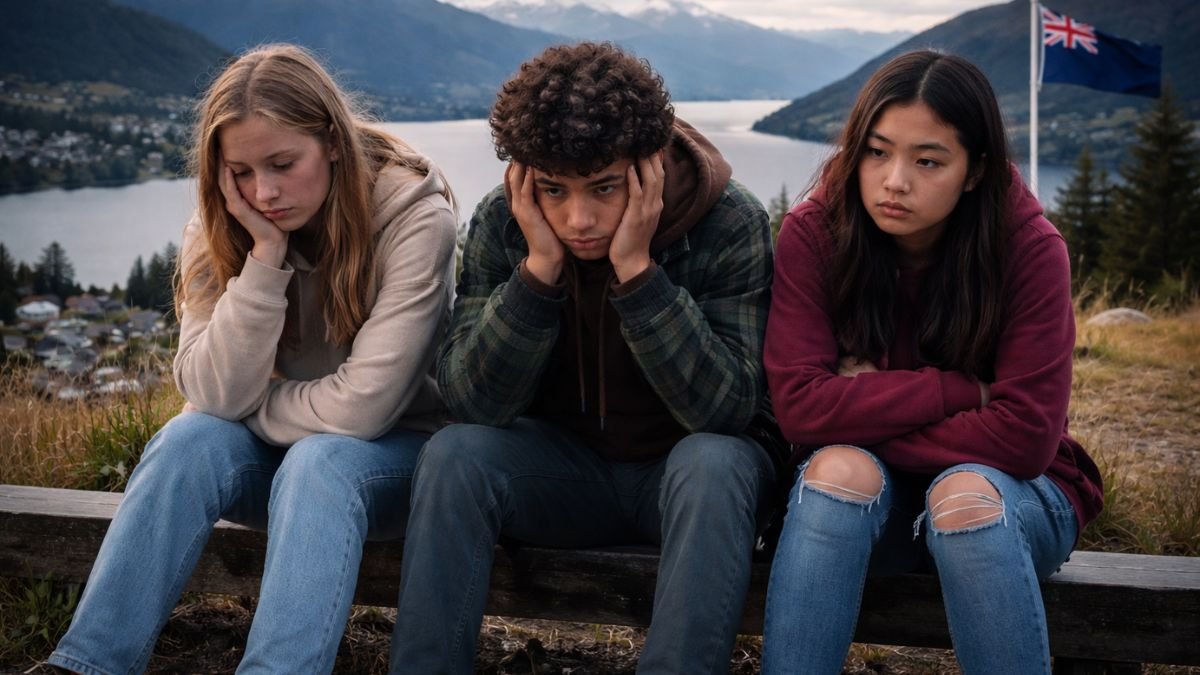
The World Happiness Report 2026 has revealed a concerning trend in New Zealand: while overall national well-being remains relatively strong, youth happiness is falling sharply.
Experts warn that this is not a temporary issue but a long-term decline that could have significant social and economic consequences.
New Zealand Still Ranks High Overall
Despite the worrying trend among younger people, New Zealand continues to perform well globally in terms of overall happiness.
Key Highlights:
- Ranked 11th out of 147 countries worldwide
- Maintains relatively high levels of general well-being
- Still considered one of the happier nations globally
However, these positive rankings mask a growing issue among younger generations.
Sharp Decline in Youth Well-Being
The report highlights a significant drop in happiness among people aged 15–24 over the past decade.
According to AUT Associate Professor Stephanie Rossouw:
- The decline is consistent and long-term, not a short-term fluctuation
- New Zealand ranks 126 out of 136 countries for changes in youth happiness
- Similar declines are seen in comparable countries like Australia, Canada, and the United States
This places New Zealand among the worst-performing nations in terms of youth well-being trends.
The Role of Social Media in Declining Happiness
One of the key factors identified in the report is the impact of social media use.
Key Findings:
- Higher social media usage is linked to lower well-being
- Passive activities like scrolling or browsing are particularly harmful
- Heavy use contributes to increased stress and reduced life satisfaction
Younger generations, especially Gen Z, are heavily exposed to digital environments, which appear to be influencing their mental health and overall happiness.
Declining Social Connection Among Young People
In addition to digital influences, the report highlights a drop in real-world social engagement among young people.
Areas of Concern:
- Reduced social connection
- Lower levels of trust
- Decreased community engagement
These factors are essential for maintaining strong mental health and life satisfaction. Their decline suggests a broader shift in how young people interact and experience the world.
A Growing Generational Divide
The findings also point to a widening gap between age groups.
- Older adults show greater resilience and stable well-being
- Younger people are experiencing declining happiness and connection
This growing generational divide could have long-term implications for society, including reduced cohesion and increased inequality in well-being.
Calls for Policy Action and Online Protections
Experts believe the findings should prompt early and proactive responses.
Stephanie Rossouw suggests:
- Stronger online protections for young people
- Consideration of policies like restricting social media use for under-16s, similar to measures proposed in Australia
The aim would be to reduce harmful digital exposure and promote healthier online habits.
Long-Term Risks for Society
The decline in youth happiness is not just an individual issue—it reflects a broader structural shift.
If current trends continue, potential consequences include:
- Lower productivity levels
- Reduced social cohesion
- Weakened community resilience
Addressing these issues early could help prevent more serious challenges in the future.
Conclusion
While New Zealand remains one of the happier countries globally, the rapid decline in youth well-being is a serious concern.
Driven by factors such as social media use and reduced social connection, this trend highlights the need for targeted interventions and policy responses.
Ensuring the well-being of younger generations will be critical not only for individuals but also for the future stability and strength of society as a whole.
FAQs
1. Why is youth happiness declining in New Zealand?
The decline is linked to factors like heavy social media use, increased stress, and reduced social connection among young people.
2. How does New Zealand rank globally in happiness?
New Zealand ranks 11th overall but performs poorly in youth well-being trends, ranking 126th for changes among young people.
3. What solutions are being suggested?
Experts recommend stronger online protections, reduced harmful social media use, and policies to improve youth mental health and social engagement.