
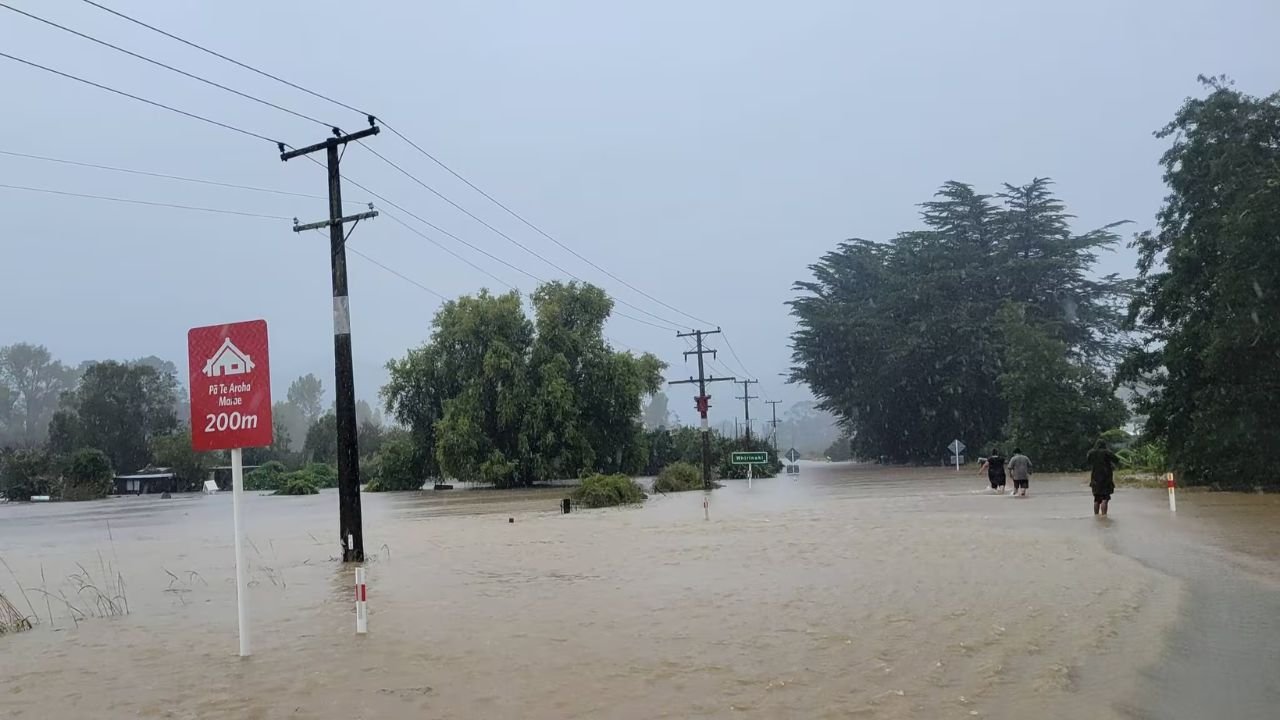
A sudden and intense weather event has brought parts of New Zealand’s North Island to a standstill, as regions recorded what experts describe as a full month’s worth of rainfall in just 24 hours. This extreme weather has caused widespread flooding, travel disruptions, and emergency warnings, leaving residents and authorities scrambling to respond.
What Happened: A Month’s Rainfall in One Day
Unprecedented Rainfall Levels
In several regions across the North Island, rainfall totals reached levels that typically occur over an entire month. Weather stations reported extremely high precipitation within a short span, overwhelming drainage systems and natural waterways.
- Some areas received over 200mm of rain in less than 24 hours
- Rivers and streams rose rapidly, leading to flash flooding
- Urban areas experienced waterlogging due to blocked drainage systems
Regions Most Affected
Severe Impact Zones
The heaviest rainfall and flooding have been reported in multiple regions, with emergency services on high alert.
Key Areas Facing Flooding Risks:
- Auckland and surrounding suburbs
- Northland region
- Waikato areas
- Bay of Plenty
These regions experienced road closures, flooded homes, and disruptions to essential services.
Urban vs Rural Impact
Urban centers faced drainage overflow, while rural regions saw farmland flooding and livestock risks. In both cases, the impact of heavy rainfall in North Island communities has been significant.
Causes Behind the Extreme Weather
Atmospheric Conditions
Meteorologists have linked this event to a combination of weather factors:
- A slow-moving low-pressure system
- High moisture levels in the atmosphere
- Warm ocean temperatures fueling rainfall intensity
These conditions created a persistent rainfall system over North Island, leading to continuous downpours.
Climate Change Connection
Experts suggest that such extreme events are becoming more frequent due to climate shifts. Warmer air holds more moisture, increasing the likelihood of intense rainfall events in New Zealand.
Immediate Impact on Daily Life
Transportation Disruptions
Heavy rainfall caused severe travel issues:
- Major roads and highways were closed
- Public transport services faced delays or cancellations
- Flights experienced disruptions due to poor visibility
Commuters were advised to avoid unnecessary travel.
Power and Utilities
Flooding also affected infrastructure:
- Power outages in several areas
- Water supply contamination risks
- Drainage and sewer systems under pressure
Authorities are working to restore services as quickly as possible.
Emergency Response and Safety Measures
Government and Local Authorities Action
Emergency services were deployed across affected regions to manage the situation.
Key Actions Taken:
- Issuing weather warnings and alerts
- Setting up emergency shelters
- Conducting rescue operations in flooded areas
- Monitoring river levels continuously
Residents were urged to follow official updates regarding the North Island flood emergency situation live updates.
Safety Tips for Residents
If you are in an affected area, here are essential precautions:
Stay Safe During Heavy Rainfall:
- Avoid walking or driving through floodwaters
- Stay indoors unless evacuation is required
- Keep emergency supplies ready
- Follow local authority instructions
These steps are crucial during severe flooding events in North Island New Zealand.
Rainfall Data and Key Details
Below is a simplified table to help understand the situation clearly:
| Category | Details |
|---|---|
| Event Type | Extreme rainfall |
| Rainfall Amount | Up to 200mm+ in 24 hours |
| Equivalent | About one month’s rainfall |
| Main Regions Affected | Auckland, Northland, Waikato, Bay of Plenty |
| Major Impacts | Flooding, road closures, power outages |
| Cause | Low-pressure system + high moisture |
| Risk Level | High flood risk |
| Emergency Response | Active rescue and warnings issued |
| Travel Status | Disrupted in multiple regions |
| Future Forecast | More rain expected |
What Happens Next: Weather Forecast
More Rain Expected
Weather agencies have warned that the situation may not improve immediately. Additional rainfall is expected in some regions, increasing the risk of further flooding.
- Continued rain in affected zones
- Potential for landslides in hilly areas
- River levels expected to remain high
This means residents must stay alert and follow updates about the ongoing North Island rainfall warning forecast.
Long-Term Concerns
Such extreme weather events raise concerns about infrastructure preparedness and climate resilience.
Authorities may need to focus on:
- Improving drainage systems
- Strengthening flood management strategies
- Enhancing early warning systems
Economic and Environmental Impact
Damage to Property and Infrastructure
Flooding has already caused damage to homes, roads, and public infrastructure. Repair costs are expected to be significant.
Agricultural Losses
Farmers in affected regions face:
- Crop damage
- Livestock risks
- Soil erosion
The impact of heavy rainfall on agriculture in North Island New Zealand could affect local economies.
Environmental Effects
While rainfall replenishes water resources, excessive amounts can lead to:
- Soil erosion
- Water pollution
- Habitat disruption