


When it comes to investing, most people focus on visible factors like returns, fees, and fund performance. However, there is a less obvious but equally important factor that can significantly impact long-term wealth—tax structure.
For many Kiwi investors, misunderstanding how tax rules apply to their investments can quietly reduce gains over time, sometimes costing thousands of dollars without them even realizing it.
Why Tax Is a Hidden Cost of Investing
Investment taxes are often overlooked, yet they function just like any other cost.
According to Dean Anderson, founder of Kernel Wealth, tax should be treated as a core part of any investment strategy.
- Tax directly affects your net returns
- Poor structuring can lead to unnecessary losses
- Many investors are unaware of how their investments are taxed
Failing to consider tax implications can mean leaving money on the table.
Understanding FIF and PIE Tax Structures
Most Kiwi investors encounter two main tax systems:
1. Foreign Investment Funds (FIF)
This applies when you invest directly in:
- Overseas shares
- International exchange-traded funds (ETFs)
Under FIF rules:
- Dividends and gains may be taxed based on your income tax bracket
Current Tax Rates:
- $0 – $15,600 → 10.5%
- $15,601 – $53,500 → 17.5%
- $53,501 – $78,100 → 30%
- $78,101 – $180,000 → 33%
- $180,001+ → 39%
For higher earners, this can result in significantly higher tax liabilities.
2. Portfolio Investment Entities (PIE)
PIE funds offer a more tax-efficient structure:
- Maximum tax rate is capped at 28%
- Applies regardless of your personal income
This cap can create a substantial difference in after-tax returns, especially for high-income investors.
How Tax Differences Add Up Over Time
Even small differences in tax rates can compound into large losses over time.
For example, comparing two investments of $100,000 earning 5% annually:
- At a 30% tax rate → You pay about $100 more per year
- At 33% → Around $250 more annually
- At 39% → Up to $500 more each year
Over time, these differences can significantly erode returns. Combined with other international taxes, investors could lose 1.3% to 2.9% annually from their gains.
The $50,000 Foreign Investment Threshold Explained
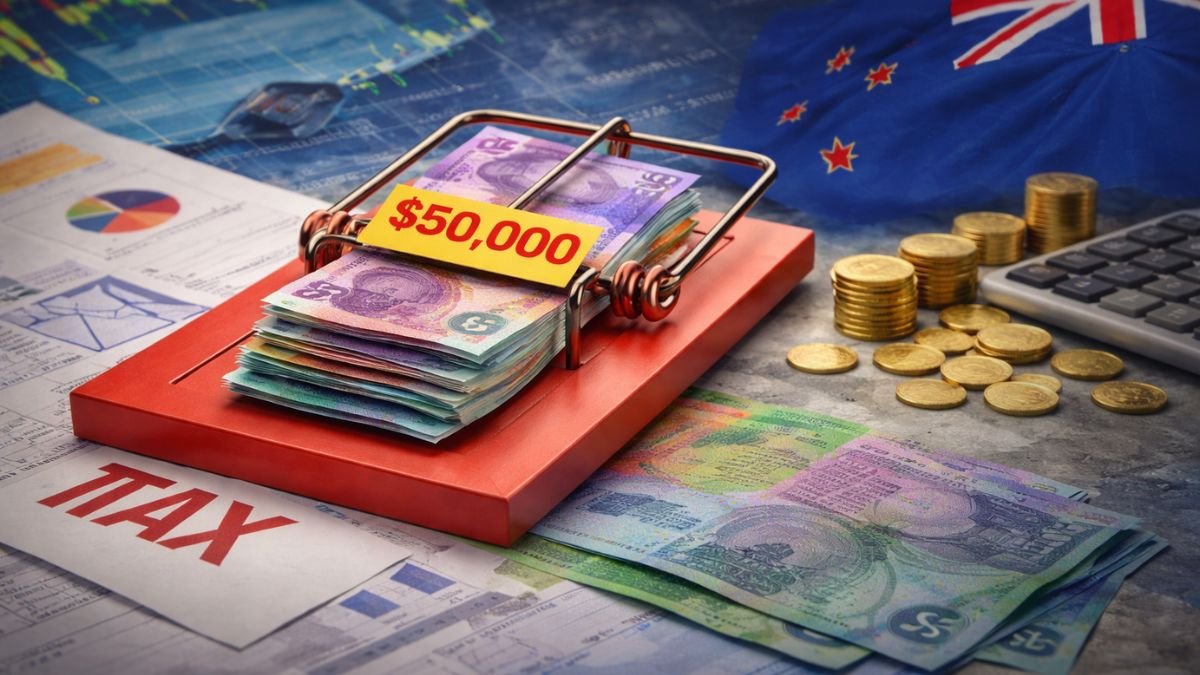
A major risk for Kiwi investors is crossing the $50,000 threshold in foreign investments.
This threshold is based on:
- The original cost of the investment
- Not its current market value
What Happens After $50,000?
Once you exceed this level:
- You move into a deemed income system
- Your taxable income is calculated as 5% of your portfolio’s opening value each year
This applies even if:
- You didn’t sell any shares
- You received no dividends
- The market performed poorly
This means you could be taxed on income you never actually received.
Why the Rule Can Be a Double-Edged Sword
The deemed return system has both benefits and drawbacks:
Advantages:
- If your investments grow more than 5%, your effective tax rate may be lower
Disadvantages:
- If markets are flat or declining, you still owe tax on a 5% assumed return
- This can feel unfair during downturns
Tax expert Sam Mathews warns that many investors unknowingly enter this “tax minefield” without proper planning.
Why the $50,000 Rule Feels Outdated
The $50,000 threshold has remained unchanged for over 25 years, despite major changes in how people invest today.
With easier access to global markets:
- More investors are crossing this limit unintentionally
- The rule no longer reflects modern investment behavior
While some updates have been introduced for migrants and returning residents, broader reforms may still be needed.
How Investors Can Protect Themselves
To avoid unnecessary tax costs, investors should:
- Track the total cost of foreign investments
- Understand which tax system applies (FIF vs PIE)
- Consider keeping direct foreign investments below $50,000
- Seek professional advice when needed
Aligning your investment structure with your financial goals can make a significant difference over time.
Conclusion
The $50,000 tax threshold is a critical tipping point for Kiwi investors, and crossing it without understanding the implications can lead to unexpected tax bills.
While taxes may seem like a minor detail, they can have a major long-term impact on investment returns.
By paying attention to tax structures, choosing the right investment vehicles, and staying informed, investors can protect their wealth and avoid costly mistakes that compound over time.
FAQs
1. What is the $50,000 tax threshold?
It is the point where foreign investments become subject to FIF rules and deemed income taxation.
2. What is the difference between FIF and PIE funds?
FIF investments are taxed based on income tax rates, while PIE funds have a capped tax rate of 28%.
3. Can I avoid the deemed 5% tax rule?
Yes, by keeping direct foreign investments below $50,000 or using PIE-structured investment options.